
The front glass built to withstand the mountain.
In our very first innovation project, we put the solar roof tile to the test in one of the world's harshest climates – at the Norwegian research station Troll in Antarctica – all the way to breaking point.
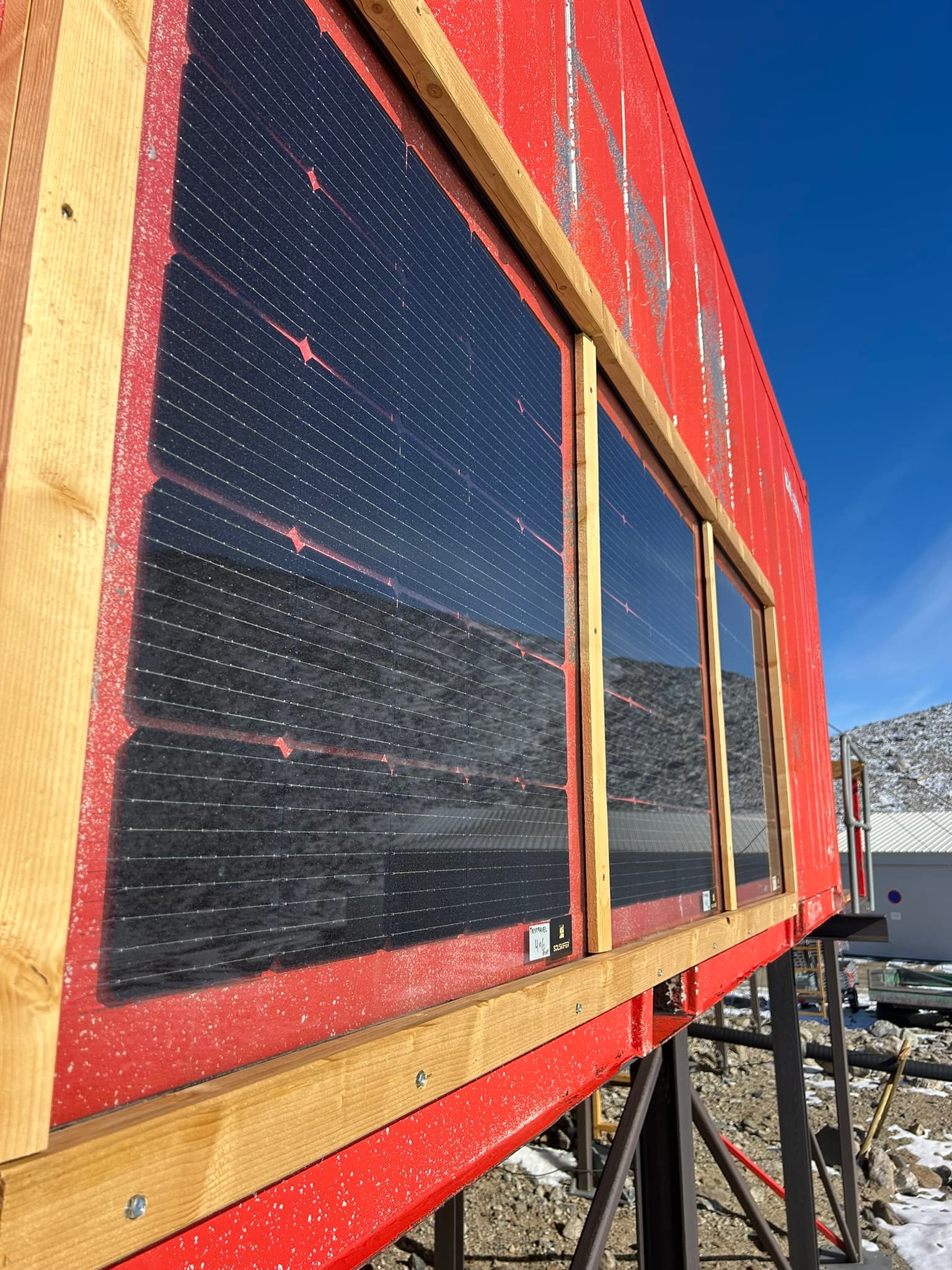
Built for Norwegian weather
A roof in Norway has to withstand hail, heavy snow loads, large temperature swings and years of UV radiation – often all at once, and often at its worst in open, high-lying terrain. For us in Elverum, it was never enough to know that a solar roof tile works in the laboratory. We wanted to know how it behaves outdoors, in a real and demanding Nordic climate.
That is why we started our first research and innovation project: a systematic search for the construction that withstands the most, for the longest. And we took it to where the climate is even harsher than at home – all the way to the Norwegian research station Troll in Antarctica.
Methodology
What we tested
We built a series of test panels – marked “Testpanel 4×4 Front” – with different front glass thicknesses and different combinations of glass and solar cell. The panels were mounted in an exposed test rig at the Norwegian research station Troll in Antarctica – one of the most weather-beaten environments on Earth – where they faced extreme cold, strong winds, UV radiation and wind-driven grit and small stones from the ground grinding against the surface, with no shelter.
Throughout the work, we used recognised test methods as our frame of reference: hail impact and mechanical loading (static and dynamic) for snow and wind following the principles of IEC 61215, thermal cycling and damp-heat stress. We evaluated toughened versus heat-strengthened glass, anti-reflective coatings, different encapsulation materials and monocrystalline, half-cut cells. Some panels were deliberately pushed beyond breaking point – resulting in shattered front glass – because that is where you learn where the limits actually lie.
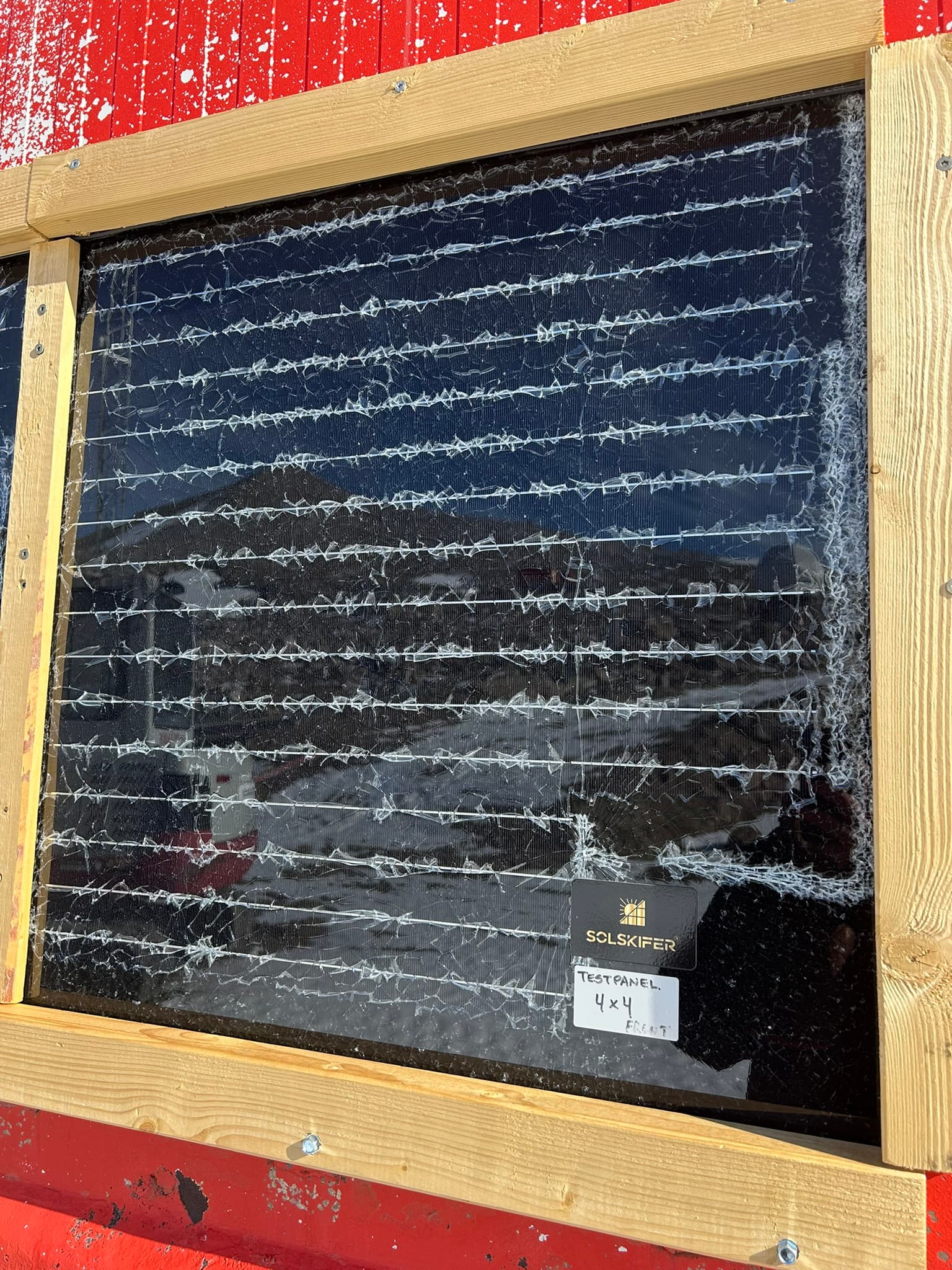
“We push the constructions until they shatter – because that is where we learn exactly how much your roof can really take.”
From the test rig
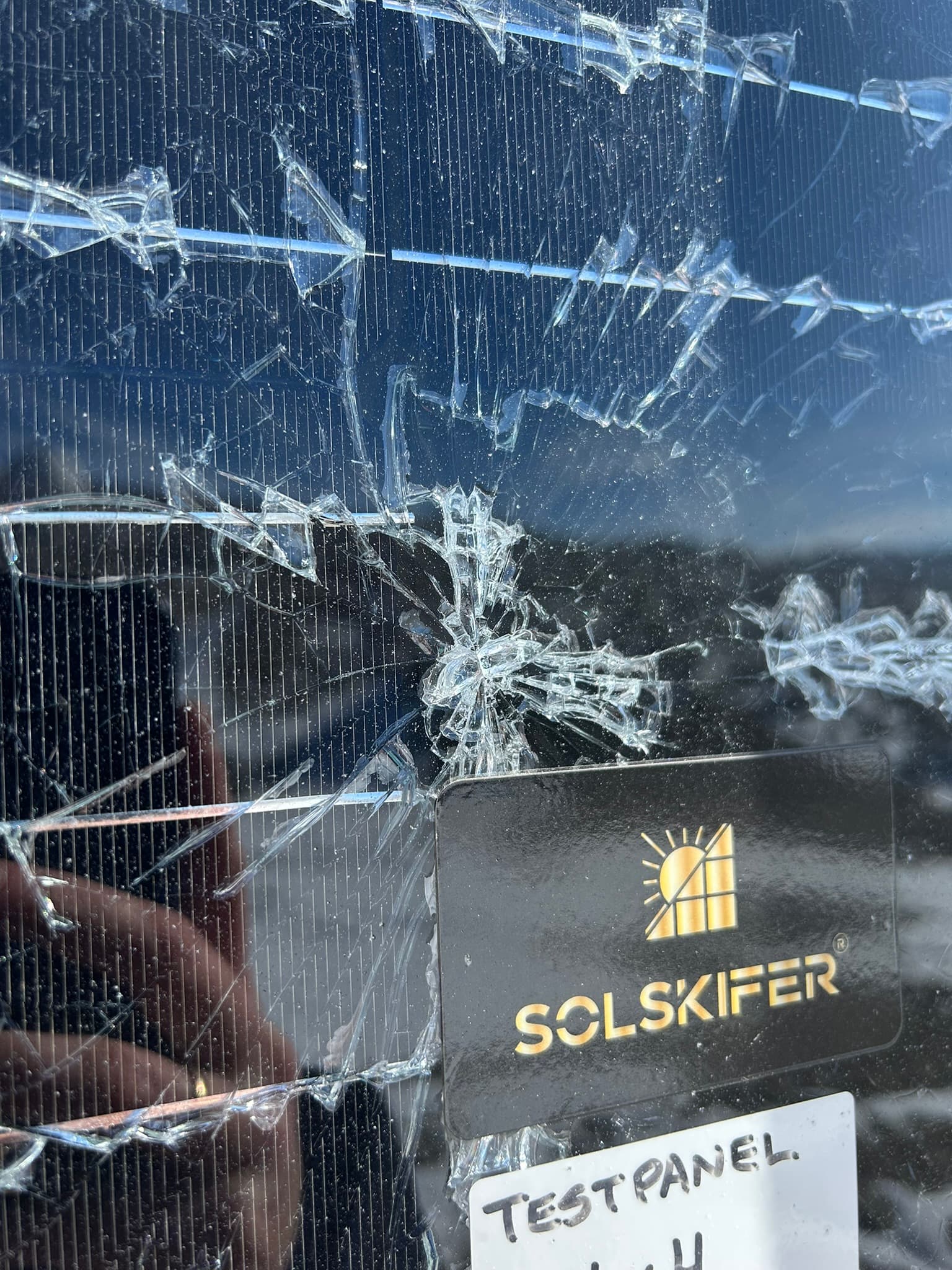
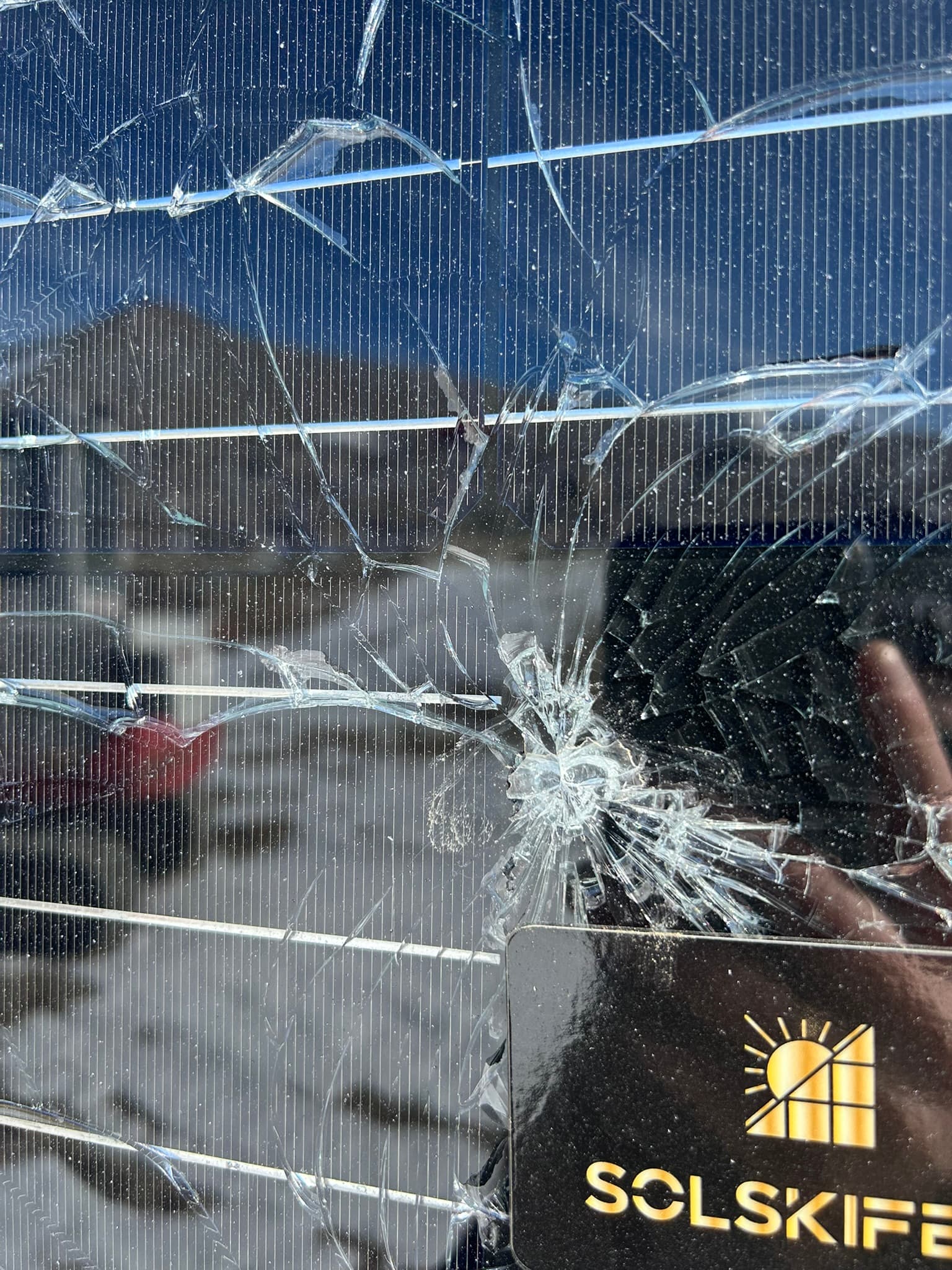
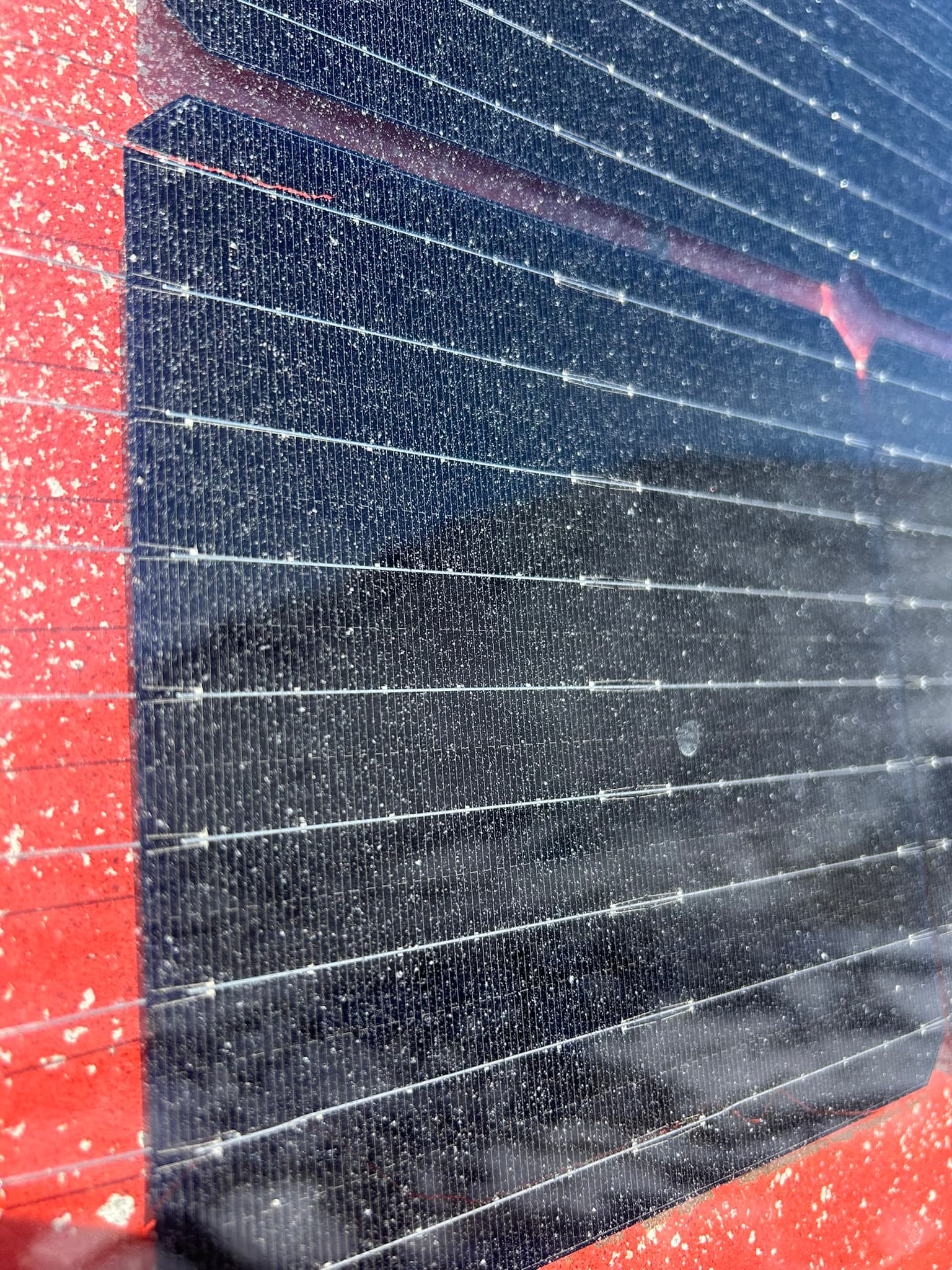
Why the front glass is decisive
The front glass is the roof tile's first and most important line of defence. It has to absorb the impact of hail and wind-driven grit, carry snow loads without giving way, and at the same time let as much light as possible through to the cells behind. Choose glass that is too thin, or the wrong glass, and micro-cracks form in the cells – invisible to the eye, but measurable – eroding performance over time. Wind-driven particles can also wear down the glass surface and any anti-reflective coating, so that less light gets through.
The balance is a demanding one: the glass must be strong enough to protect, yet optimised for light transmission and the lowest possible weight. It is precisely this balance our project was built to map.
What we learned – and the road ahead
The tests gave us a clearer picture of which constructions hold up, and which fail once the load becomes great enough. That insight now feeds straight back into product development, so that our design choices rest on documented experience – not assumptions.
This is the start of a long-term effort. We keep testing, measuring and improving, because a roof should last for generations – even when it stands in the middle of Norwegian weather.
The project in brief
Want to know more, or collaborate?
We are happy to share more about our innovation work with architects, contractors and research communities.